
Industry body to write to commerce ministry, seek regulation for e-tailers.

The Modi government's flagship initiative 'Make in India' launched 10 years ago has helped the country boost exports, push investments and promote manufacturing. Under the initiative, launched on September 25, 2014, a series of measures have been taken by the government to boost local manufacturing. These initiatives include the rollout of production linked incentive (PLI) schemes for 14 sectors, easing foreign direct investment (FDI) norms, reducing compliance burden to improve business climate, all approvals through single window, and rolling out of the national logistics policy.

India stares at the risk of an influx of Chinese products as US tariffs on a range of Chinese goods, including solar panels, electric vehicles, lithium-ion batteries, syringes, and steel, are set to take effect from September 27. With higher tariffs reducing China's access to the US market, there is concern that China may divert its exports to other markets, including India, which could lead to potential dumping of goods. This situation could challenge Indian industries, particularly in sectors where competition with Chinese products is already fierce.

The decision came a day after the resignation of Telugu Desam Party's Ashok Gajapathi Raju was accepted by President Ram Nath Kovind

India Inc on Thursday pitched for lowering income tax burden on common man, increase in capital expenditure, and firm steps to contain food inflation in their nearly two-hour long interaction with finance minister Nirmala Shitharaman ahead of the Union Budget. During pre-Budget consultation with Sitharaman, the industry leaders and associations also urged the government to focus more on infrastructure development with a view to maintaining the economic growth momentum. The industry leaders also laid stress on boosting the MSME (micro, small, and medium enterprises) sector, considered a backbone of the Indian economy and main employment generator.
.jpg)
Government seeks stakeholders' comments by Jan 30 on discussion paper.

Thrust on infrastructure and capital expenditure is expected to continue in the Union Budget for FY25.

Nitin Desai, who has known Dr Singh from 1971, extends his 'deepest condolences to his wife Gurcharan Kaur and to his three talented daughters Upinder, the historian; Daman, the writer; and Amrit, the human rights activist.'

Currently, 100 per cent FDI in is permitted if the companies manufacture cigars or cigarettes or allied products.

The chamber has sought clarity from government to remove uncertainty among businesses

Eyeing $9 billion business opportunity in booming e-commerce business, India Post, which has the biggest network and serves the last mile, is boosting its infrastructure for real-time tracking of parcels through satellites using a new technology.

Amidst strained ties with China, the pre-budget Economic Survey on Monday made a strong case for seeking foreign direct investments (FDI) from Beijing to boost local manufacturing and tap the export market. As the US and Europe are shifting their immediate sourcing away from China, it is more effective to have Chinese companies invest in India and then export the products to these markets rather than importing from the neighbouring country, the Survey said.

According to the commerce and industry ministry data, during April-February 2018-19, the eight sectors recorded a flat growth rate of 4.3 per cent over the same period previous fiscal.
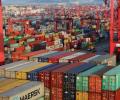
India's merchandise exports in April 2024 marginally rose to $34.99 billion from $34.62 billion in the year-ago month, according to government data released on Wednesday. Imports too increased to $54.09 billion from $49.06 billion in April 2023.

In order to counter the growing penetration of e-commerce portals, the ICT industry in Gujarat is also mulling initiation of its own portal for selling products.

India has reduced the time period for foreign investors to seek international arbitration from five years to three years as part of the recently signed investment pact with the United Arab Emirates (UAE), a departure from its model Bilateral Investment Treaty (BIT). Under the Investor-State Dispute Settlement (ISDS) mechanism, if the Indian judicial system is unable to resolve a dispute within this shortened period, investors can resort to international arbitration. The investment pact, signed on February 13 in Abu Dhabi, came into force on August 31, replacing the previous pact.

Among other things, taking note of complaints against several Chinese e-commerce players such as Shein, Ali Express etc for sending shipments as 'gifts' to customers in India and avoiding duties, the government has now mandated that all e-commerce sites and apps must have a registered business entity. This will be the importer on record and subject to customs rules, report Subhayan Chakraborty, Neha Alawadhi and Karan Choudhury.

Wholesale price-based inflation rose to an eight-month high of 0.26 per cent in November, driven by a sharp jump in food prices, especially onion and vegetables. The WPI inflation was in the negative or deflationary zone for the past seven months since April and was at (-)0.52 per cent in October. The last positive WPI inflation was recorded in March at 1.41 per cent.
Concerned over the fallout of the Red Sea crisis and severe shortage of containers against the backdrop of a steep decline in merchandise exports in August, the Union government is pulling out all the stops to find a solution. To begin with, the government has devised a strategy aimed at boosting container supply and supporting exporters.

The wholesale inflation rose to a 13-month high of 1.26 per cent in April fuelled by rising prices of food articles, especially vegetables, amid expectations of RBI holding interest rates in the policy review next month. The wholesale price index (WPI) based inflation has been rising for two months in a row.


The Union ministry of food and consumer affairs proposes to insert a new clause in the fresh discussion note for the Cabinet on allowing foreign direct investment (FDI) in multi-brand retail.

The wholesale price-based inflation declined to a 19-month low of 8.39 per cent in October, on easing prices of fuel and manufactured items. This is the first time in 19 months that WPI inflation print has come in single digit. Last was in March 2021 at 7.89 per cent. Since April 2021, WPI inflation remained in double digits for 18 months with September print at 10.79 per cent.

Following the disengagement, both sides will soon start the coordinated patrolling in their respective areas, sources added.
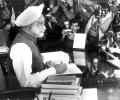
'The critical event signalling a new era for India was Dr Singh's 1991 Budget in which he quoted Victor Hugo to say that no power on earth could stop an idea whose time has come,' recalls T N Ninan.
The commerce ministry recently announced that it intends to switch over to a small negative list for trade with India by the end of February and to phase out this regime by the end of the year.
Without making big-ticket changes in the economic ministries, Prime Minister Manmohan Singh on Tuesday shifted Law Minister M Veerappa Moily to the ministry of corporate affairs and inducted young Milind Deora in his council of ministers.
Business chamber Assocham has asked the government to accord industry status to organised retail sector, which would improve investment inflows into the sector and increase its share in this segment. The move would increase the share of organised retail in the overall sector to 20-22 per cent from the current 3 per cent, Assocham said.
The Department of Industrial Policy and Promotion (DIPP) under the Ministry of Commerce has called a meeting on July 10 to discuss the foreign direct investment (FDI) policy in the cigarette industry.

According to a commerce and industry ministry statement, the growth rate for these eight key sectors for April 2019 has been revised upward to 6.3 per cent from 2.6 per cent reported earlier mainly due to upward revisions in production of coal, crude oil, steel, cement and electricity.

Indian Railways has managed to improve its freight volumes each year since the pandemic. However, its inability to add new industries and goods will pose a challenge for the national transporter in the wake of it setting an ambitious target of 45 per cent share in the national logistics by 2030. According to officials, the ministry of railways achieved 114 million tonnes (mt) of miscellaneous goods (classified as balance and other goods) in 2023-24.
The finance ministry is of the view that all interests -- direct and indirect -- should be taken into account and that there should not be any threshold for calculating total effective foreign shareholding in a company.
Union Commerce and Industries Minister Kamal Nath on Friday said he disagreed with the finance ministry on the controversial fringe benefit tax, saying the tax laws should be made simpler.

Wholesale price inflation remained in the negative territory for the fourth month in a row in July at (-)1.36 per cent, even though prices of food items, especially vegetables, skyrocketed. The inflation, however, has inched up from (-)4.12 per cent recorded in June fuelled by 62.12 per cent rise in vegetable prices. In July last year, wholesale price index (WPI) was 14.07 per cent.

As Chandigarh braces for a fierce contest between Congress candidate Manish Tewari and the BJP's Sanjay Tandon, its industry leaders harbour a fervent wish: Replicate the success of the National Capital Region model in this Union Territory.
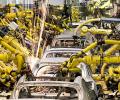
Fresh guidelines issued by the Union home ministry on Wednesday permit industries operating in rural areas to run from April 30 with strict social distancing norms.

As sanctions-hit Russia increasingly relies on consumer products from India, outbound shipments to Russia have started picking up for the second consecutive month in October. This comes after it witnessed contraction for six consecutive months starting March, commerce and industry ministry data showed. During October, India exported goods worth $280 million, up 3.7 per cent as compared to a year ago. It was led by demand for items such as vegetables, tea, coffee, chemicals as well as iron and steel products.

The output of eight core sectors grew by 11.6 per cent in August, mainly due to an uptick in the production of cement, coal, and natural gas, official data showed on Thursday. The eight infrastructure sectors of coal, crude oil, natural gas, refinery products, fertilisers, steel, cement and electricity had contracted by 6.9 per cent in August 2020 due to the nationwide lockdown imposed to control the spread of COVID-19. The eight core industries comprise 40.27 per cent of the weight of items included in the Index of Industrial Production (IIP).
